If you are trying to buy from China, one of the most common questions is simple: how do you actually find reliable Chinese wholesale suppliers?
Most buyers start in the obvious places. They search online, compare websites, send inquiries, and collect quotations.
That is normal. But that is also where many problems begin.
A supplier can look impressive online and still be the wrong supplier for your order. A product page can look clean and professional, but it does not tell you whether the company behind it is really a manufacturer, whether the pricing is realistic, or whether the business becomes difficult once money moves.
That is why finding a supplier and finding a reliable supplier are not the same thing.
In this guide, we break down how buyers actually find Chinese wholesale suppliers in 2026, where most buyers go wrong, and what to check before paying a deposit.
If you are still at the platform-comparison stage, our guide to China wholesale websites is the best starting point. If you already know the product category and need an offline comparison route, our guide to China wholesale markets covers the main market ecosystems.
If you want a buyer-side China sourcing agent to build the shortlist instead of doing the first screen alone, see our factory sourcing service.
Quick answer
If you want the short version, reliable China suppliers are usually found through a mix of:
- wholesale platforms and trade websites
- direct China-side supplier search
- verification of company records
- sample and production-fit checking
- buyer-side filtering before payment
The mistake is treating step one as the whole process.
What most buyers mean when they search for Chinese suppliers
When people search for terms like china wholesale supplier, chinese wholesale suppliers, or supplier in china, they are usually trying to solve one of these problems:
- they need a factory for a product they already know
- they found a supplier but are not sure whether it is safe
- they want better pricing than what they found online
- they want to know whether the supplier is a factory or a trader
- they are about to pay a deposit and want to reduce risk first
These are not all the same problem.
If you only need more names, platforms can help. If you need better judgment, you need more than a platform.
That is also why our step-by-step guide to buying wholesale from China spends more time on filtering, verification, and transaction structure than on browsing alone.
Where buyers usually find Chinese wholesale suppliers
There are several common starting points.
1. B2B marketplaces
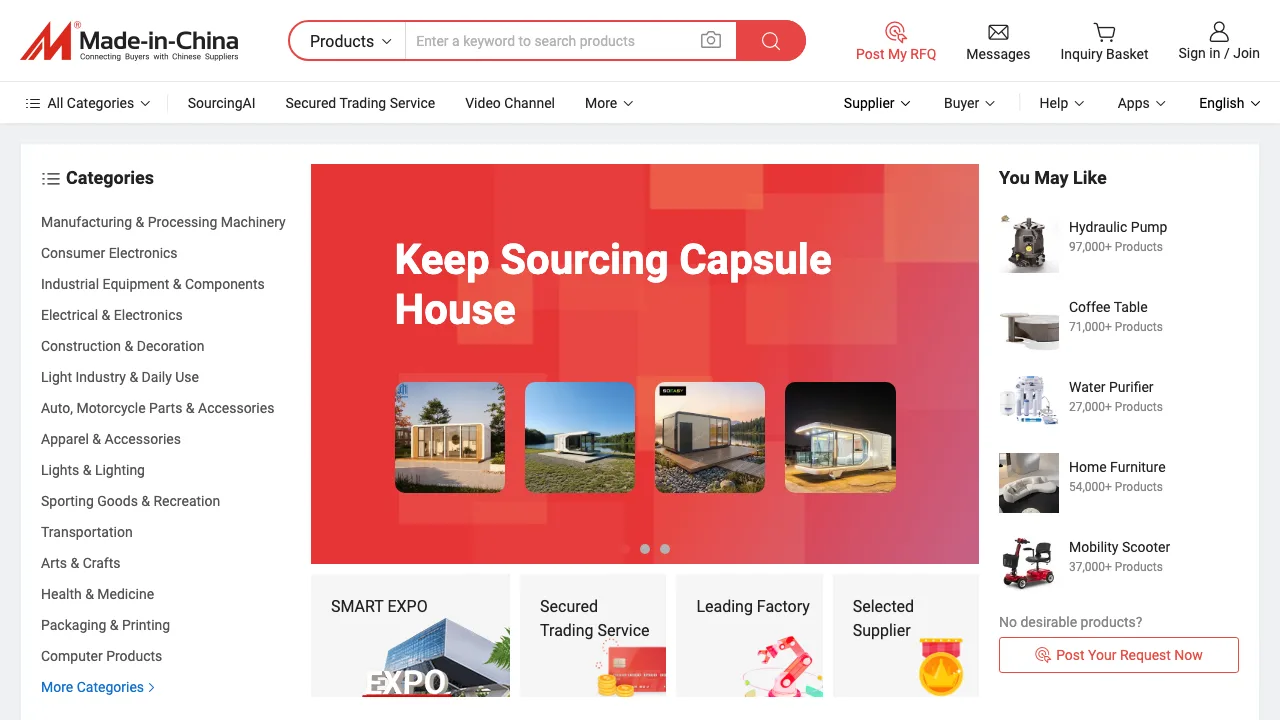
Many buyers begin with websites like Alibaba, Made-in-China, and Global Sources.
These platforms are useful because they:
- provide fast access to many suppliers
- make inquiry and comparison easy
- help buyers understand the product landscape
But they also create noise. You may see factories, trading companies, mixed operations, and suppliers that present themselves better online than they perform in real life.
2. Domestic China platforms
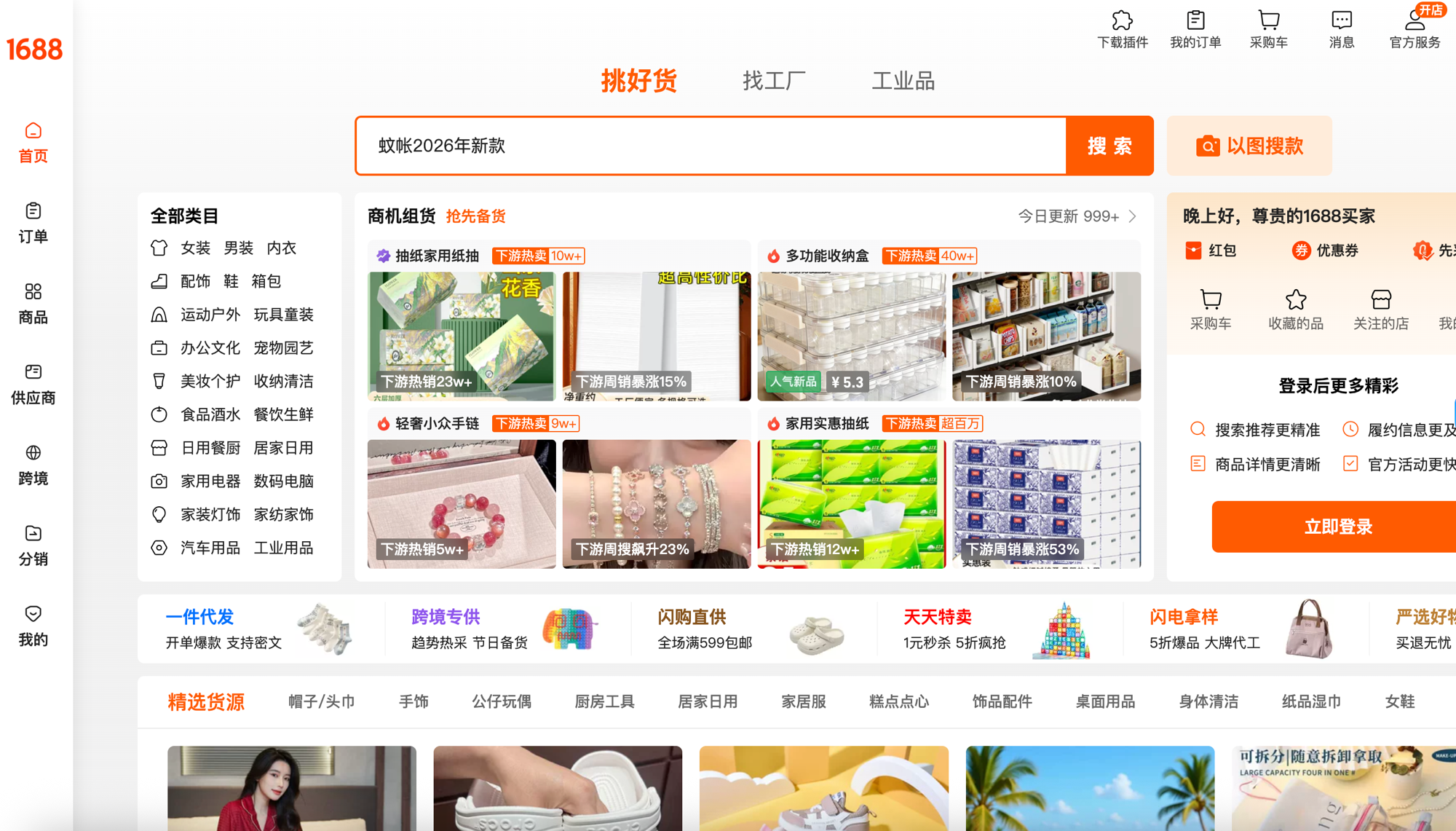
Some buyers or sourcing teams use 1688 and other China-side channels.
These can lead to deeper supplier discovery and sometimes better pricing, but they are harder for overseas buyers to use directly because of language, workflow, and local market complexity.
3. Trade fairs and industry channels
Some of the better suppliers are found through trade events, industry referrals, and long-standing sourcing networks instead of public marketplace searches alone.
This is one reason why some factories that are strong operationally are not always the loudest online.
4. Buyer-side sourcing support
Some buyers stop searching alone and use China-side support to narrow the field.
This makes sense when:
- the order size matters
- the buyer is under time pressure
- the product is not simple
- the buyer wants fewer weak-fit suppliers in the shortlist
What makes a Chinese wholesale supplier “reliable”?
Reliability is not just about whether the supplier replies quickly.
A reliable supplier usually needs to be evaluated on several levels:
Company level
- Is the company legally registered?
- Is the business scope relevant to the product?
- Is the supplier really the company named on the documents?
- Are there obvious legal or operational red flags?
Commercial level
- Is the quote realistic?
- Is the MOQ consistent with the product type?
- Are payment terms sensible?
- Are lead times believable?
Production level
- Does the supplier actually have the capability claimed?
- Does the sample quality match the quotation?
- Is the process suitable for repeat production?
Risk level
- What happens if something goes wrong?
- Is the evidence trail clear?
- Are the documents, promises, and terms specific enough to protect the buyer?
Factory or trader: why this matters
One of the most common issues in China sourcing is confusion between a real factory and a trading company.
That does not mean trading companies are automatically bad. Some are useful and competent.
The real problem is mismatch.
If you think you are dealing with a factory but are actually dealing with a trader, then your assumptions about pricing, communication, production control, and accountability may all be wrong.
That is why buyers should ask:
- Who is actually producing the goods?
- Who is issuing the invoice?
- Who is receiving the payment?
- Who is responsible if production quality drops?
If those answers are vague, the risk is already higher.
Quick supplier check table
| What to check | Why it matters |
|---|---|
| Company registration | Confirms whether the business legally exists |
| Business scope | Helps show whether the company really matches the product category |
| Supplier type | Helps distinguish factory, trader, or mixed operation |
| Pricing logic | Unrealistically low quotes often signal trouble later |
| MOQ and lead time | Tests whether the offer makes operational sense |
| Payment arrangement | Shows whether the transaction structure is exposing the buyer |
| Evidence trail | Becomes critical if a dispute starts |
Signs a supplier may not be the right fit
Some warning signs appear early if you know what to look for.
1. The quote is much cheaper than everyone else
Sometimes a cheaper quote is real. Often it is not the full story.
It may mean:
- lower materials
- missing process steps
- hidden costs later
- weak production fit
2. The company identity keeps shifting
If the sales contact, invoice company, and payment company do not line up clearly, buyers should slow down.
3. Answers stay vague when details matter
A reliable supplier does not need to answer everything instantly, but they should be able to answer clearly when you ask about lead time, MOQ, process, factory type, and documents.
4. The supplier wants money before enough checking is done
The moment before deposit is where many buyers lose leverage.
How to verify a Chinese supplier before deposit
Before paying, buyers should aim to confirm three things:
1. The company is real
At minimum, you want to know that the company exists, is registered, and matches the transaction you are being asked to enter.
2. The supplier matches the product
Not every legally registered company is the right supplier for your specific order.
3. The transaction structure is not exposing you unnecessarily
That includes:
- payment terms
- deposit size
- contract wording
- acceptance standards
- delivery expectations
If these are weak, a “good supplier” can still become a bad transaction.
What to do if you already found a supplier online
This is actually one of the most common situations.
Many buyers do not need help finding a name. They already have one.
What they need is help answering:
- Is this company real?
- Is this really a factory?
- Is the quote believable?
- Should I pay this deposit?
- What should I fix before moving forward? At that stage, the best next step is usually not another round of random searching.
It is verification.
Should you search yourself or use China-side help?
That depends on the order.
If the product is simple, the order is small, and you are comfortable testing carefully, searching yourself may be fine.
If the order value matters, the supplier fit is unclear, or you are already near payment stage, buyer-side support usually makes more sense.
The reason is simple: once money moves, weak supplier filtering becomes much more expensive.
Final answer
The best way to find reliable Chinese wholesale suppliers is not to rely on one website or one quotation.
Use marketplaces and sourcing sites to find options. Then check whether the company is real, whether the supplier type matches the product, whether the pricing makes sense, and whether the transaction terms protect you before deposit.
Finding suppliers is easy. Finding reliable suppliers is where judgment matters.
If you already found a supplier and want to reduce risk before payment, see our supplier verification service. If you need help building a better shortlist from the start, see our factory sourcing service.