Updated July 2026
China has many markets, but they are not interchangeable. Yiwu is not Guangzhou. Guangzhou is not Shenzhen. Foshan is not Keqiao. If you use the wrong market for the wrong product, you can waste a week and still come away with weak suppliers.
This July 2026 guide is for overseas buyers who want a practical answer: which China market should I look at, what is usually cheaper there, and what should I watch before paying?
The honest answer is that a market can help you compare products quickly, but it does not automatically give you a safe supplier. You still need to check who you are paying, what company is on the invoice, and whether the seller can repeat the same product after the first sample.
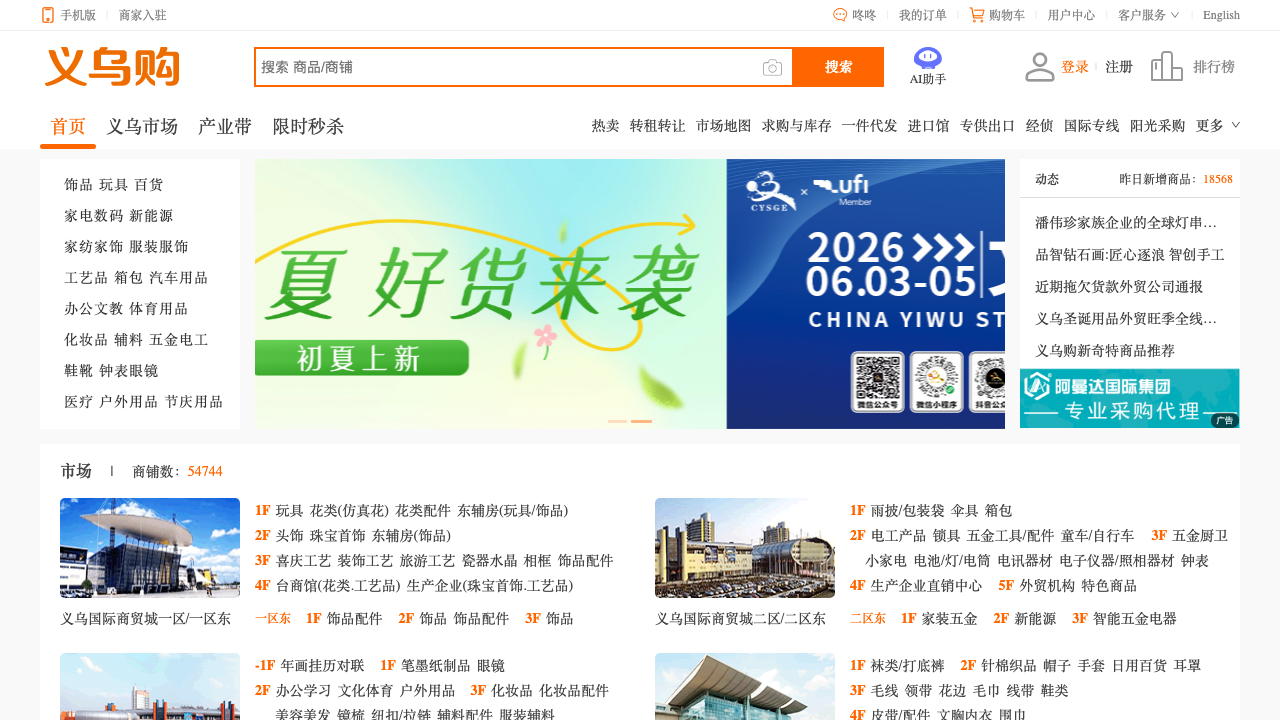
Quick guide by market
| Market or city | Usually best for | Why it can be cheaper | What to be careful about |
|---|---|---|---|
| Yiwu International Trade Market | Small commodities, gifts, accessories, packaging | Huge seller density and low-MOQ variety | Many sellers are not factories |
| Guangzhou apparel and bag markets | Clothing, bags, shoes, beauty, fashion accessories | Fast trading network and many quality tiers | Very wide quality range |
| Shenzhen Huaqiangbei | Electronics, components, phone accessories | Dense component and gadget ecosystem | Specs can be swapped if not written clearly |
| Foshan markets | Furniture, lighting, tiles, sanitary ware | Strong local production clusters | Packing, material, and shipping damage |
| Keqiao Textile Market | Fabrics and textile inputs | Huge fabric supply depth | Color, weight, and bulk consistency |
| Chenghai Toy Market | Toys, games, seasonal novelty items | Concentrated toy cluster | Safety and compliance |
| Zhongshan Guzhen | Lighting | Strong lighting supply chain | Driver, LED chip, certification, warranty |
| Wenzhou clusters | Shoes, eyewear, packaging, locks | Private factory ecosystem | Export readiness varies |
Yiwu: cheap variety, not always factory direct
Yiwu is the market many people imagine when they hear "China wholesale." It is big, organized, and full of small products. If you want keychains, party goods, hair accessories, storage items, craft supplies, stationery, small gifts, packaging, or seasonal goods, Yiwu is often a good starting point.
Why are many items cheap there? Because sellers are packed into one ecosystem and many products are standard, small, and easy to compare. Competition is visible. You can walk from one booth to another and see quickly whether a price is normal or inflated.
But the cheap price is only half the story. In Yiwu, the person in the booth may not be the factory. They may be a trader who can source from several workshops. That can still be useful, especially for small orders, but you need to know what you are buying.
When we help buyers in Yiwu, we usually write down booth number, company name, salesperson name, product version, packaging promise, carton quantity, and payment company. A lot of mistakes happen because buyers take photos all day and later cannot connect the product to the right seller.
Guangzhou: clothing, bags, shoes, beauty, and fast style changes
Guangzhou markets are strong for fashion-related goods. Clothing, bags, shoes, leather goods, accessories, wigs, beauty tools, and packaging all have serious ecosystems there.
Guangzhou became this way because it has long been a trade city. The Canton Fair, export culture, port access, and Pearl River Delta factories all helped build its market network.
What is usually cheaper? Standard fashion items, ready styles, accessories, and goods where many sellers compete in the same area. But cheap can mean many things. It may mean lower fabric grade, simpler lining, weaker hardware, or less consistent sizing.
If we are helping a buyer with bags in Guangzhou, we do not only ask for a lower price. We compare zipper, lining, stitching, handle strength, smell, logo method, packing, and MOQ. If the supplier cuts the price too easily, we ask what changed in the spec. That one question saves buyers from a lot of bad bulk orders.
Shenzhen Huaqiangbei: electronics need exact specs
Huaqiangbei is famous because Shenzhen is a real electronics city. Components, phone accessories, chargers, cables, gadgets, repair parts, boards, LEDs, and finished consumer electronics all move through this ecosystem.
It is useful because you can compare versions quickly. It is risky for the same reason.
An overseas buyer may see three power banks that look the same. One uses better cells. One has a weaker board. One has nice packaging but no useful certification. If you only compare the outside and the price, you are not really comparing the product.
In Shenzhen, the better negotiation is technical. Ask about chipset, cell, cable gauge, output, test report, warranty, packaging, and whether the supplier controls production or only trades stock. A seller who understands the product will answer differently from a seller who only copies a listing.
Foshan: furniture, lighting, tiles, and building materials
Foshan is where buyers go when physical product quality matters. Furniture, lighting, tiles, sanitary ware, doors, windows, and building materials are easier to judge in person than online.
Foshan's strength came from local production clusters. Once factories, material suppliers, showrooms, logistics, and exporters sit near each other, the city becomes hard to replace.
What can be cheaper there? Furniture and building materials can be more competitive because you are closer to production and showroom clusters. But the real value is not always the lowest price. It is seeing quality before you commit.
For furniture, we check frame, fabric, foam, stitching, hardware, packing method, carton strength, and loading plan. For tiles and sanitary ware, we care about grade, color difference, breakage rate, and replacement terms. A low price without packing clarity can become expensive after shipping.
Keqiao: fabric buyers should not rely on photos
Keqiao is a serious textile market. If you need fabric, curtains, apparel inputs, upholstery material, lace, lining, or textile accessories, it is one of the places to know.
Fabric is difficult online. Weight, hand feel, stretch, finish, color, and transparency are all hard to judge from photos.
Keqiao can be cheaper because it has deep supply and many fabric sellers competing in one place. But sample-to-bulk consistency is the big issue. A swatch can look fine. The bulk roll may be a little different. That small difference can matter a lot for apparel or home textile brands.
When we help with fabric sourcing, we usually push buyers to define GSM, composition, color reference, width, shrinkage expectations, and testing needs before price negotiation goes too far.
Chenghai: toys look simple until compliance appears
Chenghai is a toy cluster. If you are looking for plastic toys, remote-control toys, educational toys, seasonal toys, or novelty items, it can be efficient.
The market is useful because sellers understand toys. You can see many ideas quickly and compare packaging styles.
But toys are not only about price. Small parts, paint, batteries, age labeling, EN71, ASTM, CPSIA, and other market requirements may matter depending on where you sell.
For toy buyers, we ask whether the test report matches the exact item, not just a similar product. This is a common problem: the supplier shows a report, but the model number does not match the product being quoted.
Zhongshan Guzhen: lighting is a spec business
Guzhen in Zhongshan is known for lighting. Decorative lights, commercial lighting, LED fixtures, outdoor lighting, and lighting parts are all connected to this cluster.
Lighting prices vary because parts vary. LED chips, drivers, heat dissipation, housing material, finish, and certification all affect cost.
If a buyer asks only for the cheapest lamp, the supplier can always make something cheaper. The better question is: what driver, what LED, what warranty, what certification, and what packaging?
How to use this guide
If you are early in sourcing, use markets for discovery:
- compare products in person
- understand normal price bands
- learn which specs actually change the cost
- find possible supplier candidates
If you are close to payment, slow down:
- verify the company behind the invoice
- check whether the bank account matches the company
- confirm whether the seller is a factory, trader, or booth operator
- write down the exact product spec
- clarify EXW, FOB, CIF, or DDP
- plan inspection before final payment
The market is not the final answer
A good market visit can give you product direction. It can also give you false confidence.
The supplier still has to be checked. The invoice still has to make sense. The payment account still has to match. The sample still has to become a repeatable bulk order.
If you want help choosing the right market and then filtering suppliers from the buyer side, factory sourcing is the right starting point. If you already found a seller and want to check the company before deposit, use supplier verification.