For most overseas wholesale buyers, start with Alibaba, Made-in-China, or Global Sources to compare export-oriented suppliers. Add 1688 when you have a workable payment and logistics route in China. Use Yiwugo and Chinagoods for Yiwu market suppliers, and consider DHgate or AliExpress for small stock orders.
These websites solve different buying problems. A supplier directory, a retail checkout, and a domestic wholesale listing do not offer the same transaction process. This guide compares ten options by fit, then explains how to turn a listing into a usable quotation.
Ten China wholesale websites at a glance
| Website | Useful for | Buying process to expect | Main question before committing |
|---|---|---|---|
| Alibaba | Broad export sourcing and custom products | Supplier enquiry, samples, negotiated order | Are specifications and payment covered by the applicable order terms? |
| Made-in-China | Equipment, components, and manufacturing enquiries | Technical discussion and quotation | Does the supplier have the capability for your exact specification? |
| Global Sources | Electronics and trade-show supplier discovery | Enquiry and supplier follow-up | Who manufactures and who contracts for the order? |
| 1688 | Domestic stock and wholesale price comparisons | Domestic listing and account-specific payment options | Who handles receipt in China and onward export? |
| DHgate | Small batches of ready-made products | Listing-based purchase | Is the chosen variant available in the quantity and destination you need? |
| Yiwugo | Yiwu market businesses and small goods | Shop discovery, seller contact, order-specific terms | Can the shop supply consistent repeat orders? |
| Chinagoods | Yiwu market categories and merchant discovery | Search, merchant contact, service-specific arrangements | Does the business behind the listing match the shop you contact? |
| HKTDC Sourcing | Supplier discovery and trade-fair follow-up | Enquiries and business matching | Where is the supplier based and who will fulfil the order? |
| AliExpress | Samples and small resale tests | Retail-style checkout | Will the seller support the documentation and repeat volume you need? |
| ECVV | An additional B2B search and procurement channel | Listing or procurement enquiry | What role does ECVV play in this particular transaction? |
Minimum order quantities are seller- and product-specific. Treat an advertised starting price as a lead to investigate, not a complete offer for the specification you want.
1. Alibaba
Alibaba is a practical first shortlist for buyers seeking export quotations, private-label products, or custom manufacturing. Send the same brief to several relevant suppliers instead of comparing unrelated headline prices.
A Verified Supplier assessment can provide evidence about a business and its capabilities. It is inaccurate to describe the badge as only proof that a seller paid a fee. Read the third-party inspection report and check whether the company is a manufacturer, a trading business, or both. Verification does not guarantee the quality of your order. Alibaba explains the checks included in the program.
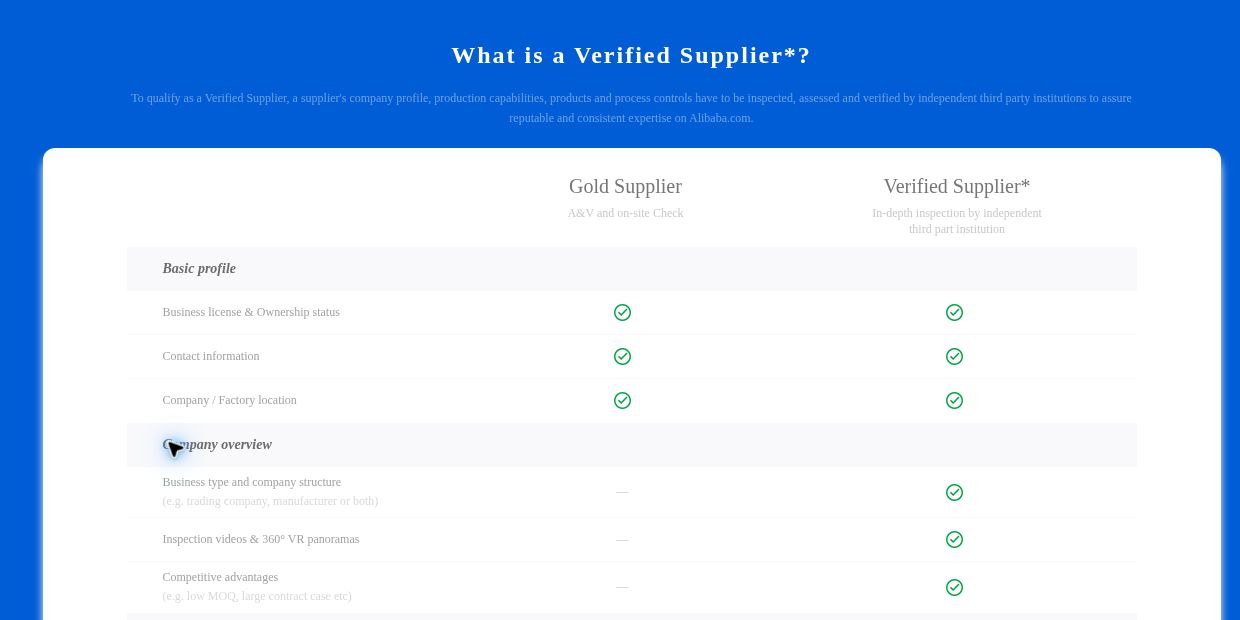
If using Trade Assurance, confirm the applicable protection, payment process, specifications, and shipping commitments in the actual order. A supplier badge and transaction protection serve different purposes.
2. Made-in-China
Include Made-in-China when comparing industrial equipment, components, and manufacturing suppliers. Use technical questions to narrow the shortlist: material grade, tolerances, capacity, spare parts, documentation, and after-sales support where relevant.
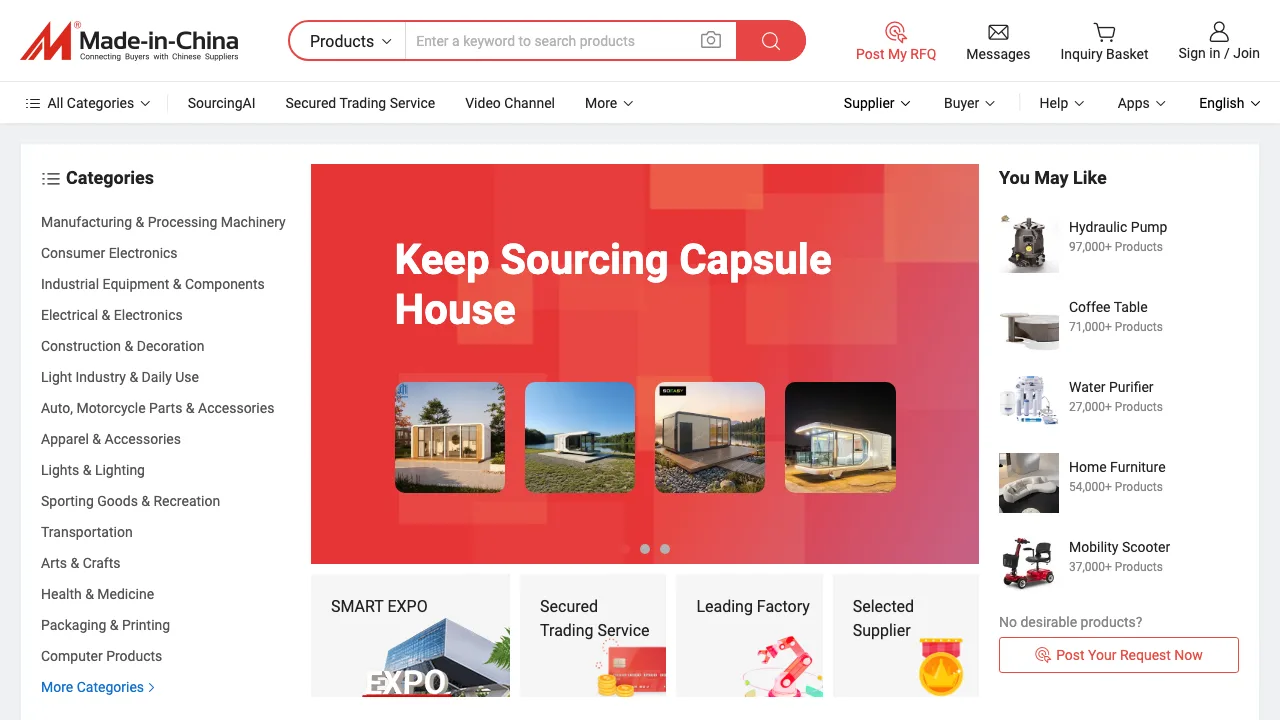
A supplier profile is an introduction. Ask for a quotation tied to your specification and check any assessment or certificate against the issuing organization, model, scope, and validity. For machinery, define commissioning, training, and replacement-part responsibilities before ordering.
3. Global Sources
Global Sources is another channel for finding suppliers and continuing conversations from trade shows, including electronics sourcing. Use it to widen your shortlist rather than assuming its suppliers are automatically better vetted than those elsewhere.
For electronics, establish the exact components, firmware, accessories, packaging, and test requirements. Products that look identical in photographs can have different internal specifications. Ask whether the proposed sample and production batch will use the same agreed configuration.
4. 1688
1688 is useful for domestic wholesale comparisons, especially when you can manage communication, receipt in China, and onward logistics. Its lower-looking listing price may exclude services that an export quotation includes.
Eligible overseas buyers can use World Pay through a linked WorldFirst account; a Chinese bank account or purchasing agent is not required for every route. Availability depends on the buyer's market, account verification, linking, and the particular order. Fees and supported methods should be checked for your account. WorldFirst's World Pay FAQ explains the requirements.
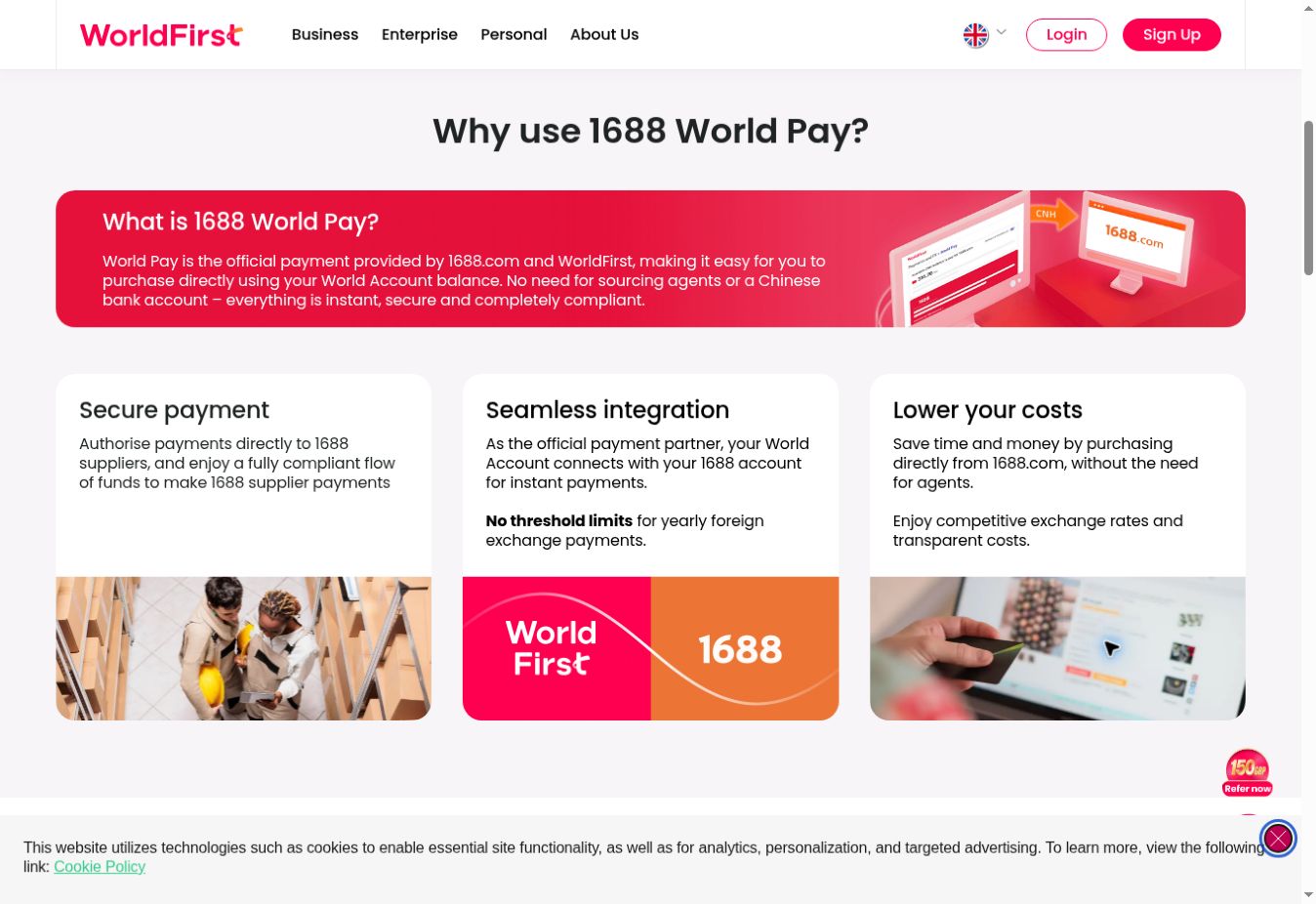
Before ordering, identify the receiving warehouse and agree who checks counts, variants, and visible defects. A payment method does not create an international shipping service or make a domestic return convenient after export.
5. DHgate
DHgate can fit a small batch of finished goods when a listing offers the quantity and destination you need. Confirm the exact variant and the price for the complete order, then read the delivery, return, and dispute conditions.
For resale, request a sample and verify the product's identity and permitted use of any branding. Do not assume an attractive branded listing comes with authorization to resell it. Keep the order record and evidence of what the seller promised.
6. Yiwugo
Yiwugo helps buyers discover Yiwu market shops and small-commodity listings. It is useful for researching categories and identifying sellers before a visit or a remote enquiry.
Record the shop details and the company that will invoice you. A stall may sell goods from several manufacturers. Ask whether your chosen item is current stock, how replenishment works, and whether a repeat order can retain the same material and finish. Our Yiwu market guide explains the in-person route.
7. Chinagoods
Chinagoods is another starting point for Yiwu market categories and merchants. Use the market information to organize a shortlist, then confirm the current shop, product availability, and order terms with the business concerned.
For mixed orders, establish the minimum per style, color, and carton. A supplier agreeing to a small total quantity does not necessarily agree to unlimited variations within that quantity. Clarify who consolidates goods from different shops and produces the packing list.
8. HKTDC Sourcing
HKTDC Sourcing connects online supplier discovery with trade-fair and business-matching activity. Its supplier base is not limited to mainland Chinese factories, so check company location and manufacturing arrangements instead of inferring them from the platform name. HKTDC describes its sourcing and matching services.
Treat a promising contact as the start of due diligence. Request the company identity, complete offer, sample process, delivery scope, and inspection access. Clarify whether the seller, a manufacturer, or another export business will fulfil and invoice the order.
9. AliExpress
AliExpress can be useful for an initial sample or a small resale test when you need ready-made products. Set the destination and variant before comparing the checkout total. Shipping, taxes, and returns depend on the offer and destination.
Retail availability does not demonstrate capacity for stable wholesale supply. Before increasing volume, ask about replenishment, consistent specifications, bulk packaging, commercial documentation, and a written quotation for the larger order.
10. ECVV
ECVV is an additional B2B discovery and procurement channel to compare if you find a relevant supplier or service. Establish whether you are dealing with a listed seller or a procurement service, and which entity will contract, receive payment, inspect, and deliver.
Do not assume one service description applies to every transaction. Ask for the complete scope and charges, then compare the offer with quotes obtained elsewhere. A narrower shortlist of relevant, responsive businesses is more useful than registering on every website.
Turn a listing into a comparable quotation
Send one consistent brief and ask suppliers to fill the gaps. For example, a request for “500 stainless-steel bottles” is incomplete without capacity, material, lid design, finish, packaging, and intended market. This is an illustrative buying example, not a quotation or a customer case.
| Item to request | What it resolves |
|---|---|
| Legal company name and business type | Who is taking responsibility for the order |
| Product specification and approved sample | What the production goods must match |
| MOQ by design, color, and packaging | Whether the quoted quantity fits your assortment |
| Unit price, tooling, and sample charges | Which costs recur and which are one-time |
| Production and dispatch milestones | What the lead time includes and when it starts |
| Shipping scope and named destination | Where the seller's delivery responsibility ends |
| Carton count, dimensions, and weight | What your forwarder needs for a usable freight quote |
| Inspection and defect remedy | How problems are found and resolved before shipment |
| Payment recipient and milestones | Who receives funds and what each payment depends on |
Use the landed cost calculator once you have comparable figures. Check current destination requirements with the relevant official sources and your logistics provider; a supplier's general claim that a product is “export quality” is not sufficient documentation.
What to do before paying or raising a dispute
Match the quotation, contract, and payment recipient. Investigate unexplained changes to the beneficiary through a previously established contact. Agree sample approval and inspection in writing before you commit, including what happens if the goods fail the agreed requirements.
If a dispute starts, save the original listing, order, messages, payment record, photos, and inspection findings. Check the applicable platform deadlines and use its dispute process where the order qualifies. Avoid assuming you can return a commercial shipment on the same terms as a local retail purchase.
For help investigating the business behind an offer, use supplier verification. For a manufacturing shortlist based on a defined product brief, see factory sourcing.
FAQ
Which China wholesale website is best for beginners?
Alibaba is a practical starting point for an export-oriented wholesale enquiry. For a few finished items, AliExpress or DHgate may be simpler. Choose according to order type and the available shipping and payment route.
Is 1688 cheaper than Alibaba?
It can be, but compare equivalent specifications and the entire delivery scope. Domestic handling, inspection, export services, freight, and returns can change the result.
Can I buy directly from a factory online?
Yes, but a listing does not prove that the seller operates the factory. Check the business identity, manufacturing location, production capability, and who signs the order.
Should I visit a market instead?
A visit can help you compare samples and assortments in person. It does not replace checking the supplier or agreeing the order. See the China wholesale markets comparison to choose a location that fits your product.